
Jan 20, 2026
Jeffrey L. Carrier opens this trilogy of short fiction with a disarming declaration: “The tales in this volume may be fiction, but there is truth behind every word.” It’s not a hollow promise. Across three tightly woven stories, Rain on Chinquapin Holler, A Sprig of Purple Asters, and Red Snow in the Kentucky Woods, Carrier delivers a haunting portrait of Appalachian life shaped by hardship, loyalty, moral ambiguity, and the endurance of families who rarely get a clean escape. Though each story stands on its own, recurring characters and shared history bind them into something larger: a small-town mythology rooted in loss and survival.
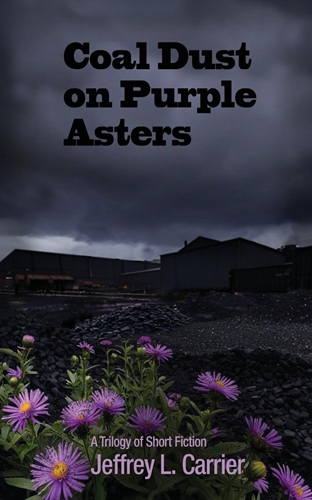
The opening story, Rain on Chinquapin Holler, starts with Wiley Hicks, a deeply flawed man and an unfaithful husband whose unhappiness leads him into an affair with Harriet Tolliver. Carrier does not excuse Wiley’s actions, but he shows him as deeply human. Wiley’s confession, “I cain’t help it. I ain’t happy no more,” is less a justification than an admission of moral weakness.
When catastrophic flooding strikes, Wiley’s true character is tested, and the story pivots from domestic betrayal to raw heroism. His desperate journey through mud, wreckage, and death toward Chinquapin Holler is vividly depicted, each detail steeped in dread and urgency. Wiley’s rescue of his wife Vergie and their daughters is both redemptive and tragic, especially when he is ultimately swept away with the collapsing family home.
Harriet’s decision to care for Vergie and her children, though, feel slightly unearned in execution. Harriet’s sudden transformation might have rung truer had it unfolded through smaller gestures before culminating in such a selfless commitment.
The author’s second story, A Sprig of Purple Asters, shifts focus to May and Zeke Owens, whose fragile but loving household is threatened by May’s criminal brothers, Lincoln and Millard Tompkins, men already familiar to readers from the first story. This tale excels in its depiction of grinding poverty and moral desperation. May’s refusal to sacrifice her children’s survival for family obligation is one of the collection’s strong moments, and her internal resolve is both heartbreaking and fierce. The story escalates through theft, violence, and fire, culminating in a powerful scene where Millard, himself deeply compromised, saves May’s son from a burning house.
Carrier’s use of dialect and setting remains immersive, but the conclusion feels less final than intended. The implication that the brothers’ threat is permanently ended doesn’t fully convince; one can’t help but wonder if danger will simply return once May and Zeke rebuild their house. Even so, the emotional truth of the Owens family’s resilience carries the story forward, grounded in Zeke’s simple, affirmation: “We’s got each other.”
The final and by far the strongest story, Red Snow in the Kentucky Woods, is a masterful blend of generational trauma, mystery, and reckoning. Spanning decades, it follows James Herald Gibson, a boy determined to escape the deadly inheritance of coal mining and the violent confrontation that seemingly seals his fate. Carrier builds tension with precision, from prophetic warnings to the sudden brutality of loss. The revelation at James’ mother’s bedside is devastating, compassionate, and … yes… beautifully earned.
The return journey, guided by nephew Cory, is both an investigation and a pilgrimage. The reappearance of Sheriff Martin Gayhart provides a wonderful connective thread across the trilogy. And the final reveal on the gravestone (a magnificent ending) serves as a perfect summation of a life split by fear, survival, and choice.
Overall, Carrier writes with an unflinching eye, crafting stories that feel lived-in and painfully honest. Despite minor structural flaws in the first two stories, this collection powerfully demonstrates the truth of hardship and the courage it takes to survive.
Buy the book on Amazon (Release date Mar 1st, 2026).